Table of Contents

Why this is harder than it looks
How to give feedback on creative starts with accepting one thing… we are not rational. However seasoned a marketer you are, it’s worth reminding yourself of this.
We react emotionally first.
Then we build a reason to justify it.
Psychologist Jonathan Haidt calls this post hoc reasoning a rationale built after the fact to explain a judgement we’d already made.
And a first look at a new creative idea asks a lot of us. We’re assessing it on several levels at once:
- Will it cut through and earn attention from a buying group that isn’t actively looking?
- Will internal stakeholders buy into it?
- Will it deliver against the brief and our commercial objectives?
- Is it a true campaign platform that can flex across every channel and touchpoint, from brand to demand?
- Does it build our distinctive brand assets or borrow someone else’s?
Then there’s the question nobody says out loud. Do we actually like it and is it something we’re excited to work on? That’s not a bias to hide, as ideas need a champion – especially when you need to sell them in to the rest of the business. But it’s worth admitting, so it doesn’t quietly disguise itself as a strategic objection.
The good news is that feedback is one of the most powerful tools you have. Done well, it’s what turns a promising idea into work that’s genuinely great and makes the agency want to go the extra mile for you.
Before you’re in the room
You get out what you put in.
Take the time to make sure there’s a clear brief, audience and proposition you’ve both agreed on. Get these right and you’re starting from a solid place.
It can also help for the agency to speak directly to the person responsible for the product or service you’re promoting. They often know the client and the detail better than anyone, and a short conversation can sharpen the brief considerably.
Just as importantly, make sure your internal stakeholders have signed off the brief too, not just you. In partner-led firms especially, it’s much easier to align senior people on the brief than to debate the work later. If someone’s view only surfaces once they’ve seen the creative, you’ll be judging the idea against a brief the agency was never given.
It also helps to agree the process upfront: how many rounds of feedback you have, who has final sign-off and when the agency can expect to hear back from you. That protects your timeline and your budget and means nobody is left waiting.
When it comes to what you’ll see, the level of finish varies. Sometimes you’ll see rough thinking. Sometimes something more worked-up. It depends on timing, budget and how the agency usually works.
A good agency will tell you what to expect before you walk in. If they don’t, ask. It’s a quick check-in, and it means you (and anyone else in the room) know what you’re actually looking at.
If you have time, it’s always worth a quick scan of your brief or the agency’s creative brief beforehand.
How the session itself should run
Typically, the agency will open with a short recap of the brief to get everyone in the right mindset. They’ll then present the work, either pausing after each idea for feedback or running through all the ideas in one go.
A few helpful suggestions:
- Take notes as the work is presented. Instant reactions are hard to recall and hard to recreate as time passes.
- Ask the agency which idea they’d back. Hearing their view first gives everyone in the room time to digest the work. Don’t be surprised if their opinions are divided.
- Agree in advance who will comment first. Depending on your team, this helps everyone enjoy the process. It can be unnecessarily uncomfortable for junior members to be put on the spot.
How to evaluate what you’re seeing
Stay disciplined and keep bringing everything back to the proposition you agreed. It’s your fixed point and the fairest test of any idea.
That discipline matters whatever your first reaction.
Sometimes you’ll feel the excitement of an idea that’s clearly right. Sometimes you’ll feel disappointment, because you’ve maybe waited weeks, built up a picture in your head and what’s been presented doesn’t match it. Either way, that gut response is useful information, but it isn’t feedback yet.
- Start with what’s working. Before getting into problems, say what you like and why. It isn’t just politeness. Knowing what’s landing tells the agency what to protect and build on, which is as valuable as knowing what to fix.
- Be as specific with praise as with criticism. ‘Love it’ is as hard to act on as ‘hate it’. Point to the line, the visual or the insight that’s doing the work and connect it back to the proposition, so it survives the next round intact.
- Judge the idea, not the execution. Early work is rough by design. A non-compliant or technically incorrect line or placeholder image can be fixed – a weak idea can’t. Ask whether the thinking is right before worrying about how it looks.
- Avoid jumping to the solution. It’s tempting to jump straight to your own solution, but explain what isn’t working first. The agency needs to understand why something misses the mark to fix it properly – that’s the expertise you’re paying for. Framing feedback as questions helps: ‘What was the thinking behind this line?’ or ‘Did you explore a version that leads with the client outcome?’ often gets you further than an instruction.
- Show, don’t just tell. If you can’t find the words for what’s missing, a reference can help. A tone of voice, a piece of photography or a campaign from another sector can say in seconds what takes paragraphs to explain.
- Strip out the emotive language. If the work isn’t landing, ‘I’m disappointed’’ or ‘it’s just not us’ gives the team nothing to act on. Translate the feeling into something specific: which part of the proposition it misses, or which audience it won’t reach.
- Separate must-haves from nice-to-haves. Not every comment carries the same weight, so be clear which changes are essential and which are suggestions. And if a piece of feedback relies on information that wasn’t in the brief, be honest that it’s a re-brief, not a failure of the work.
Five tests for B2B, financial and professional services
Most guides on how to give feedback on creative are written for consumer brands. In financial and professional services, a few extra questions matter.
- The swap test. Could a competitor put their logo on this and run it unchanged? In a sector where so many firms describe themselves as a ‘trusted partner’, work that could belong to anyone won’t be remembered by anyone. Credible isn’t the same as memorable, and this is the simplest way to check.
- Safe isn’t the same as right. Regulated firms naturally lean towards the conservative, and senior stakeholders may push work in that direction. When an idea is described as ‘too risky’, ask whether it’s genuinely a compliance or reputational risk, or simply unfamiliar. Regulation constrains what you can say, not how distinctively you say it.
- The jargon check. Financial services copy drifts into insider language, especially after technical stakeholders have had their say. Ask whether a client, not a colleague, would understand it. For retail-facing wealth firms, this also supports the FCA’s Consumer Duty expectations on consumer understanding.
- Which audience are you judging for? Asset managers and platforms often need work to land with intermediaries and advisers as well as end investors. Be clear which audience the work is for, and make sure each reviewer is judging it through the right lens.
- Will they remember it, not will they call tomorrow? Choosing a wealth manager, an asset manager or a consultancy is an infrequent, considered decision. At any given moment, most of your prospects aren’t in market. The right question isn’t whether the work will drive an immediate response, but whether it will make your firm the one they remember when they’re ready to buy.
When the feedback isn’t just yours to give
In financial and professional services, you’re rarely the only one whose opinion counts. A managing partner, a CEO, a head of distribution, head of sales, a portfolio manager or a senior adviser may all need to sign off, and many of them will have no marketing background at all. Your job isn’t just to have your own view. It’s to gather theirs and turn it into one clear, useful piece of feedback for the agency.
- Ask everyone the same specific questions. A general ‘thoughts?’ invites vague, taste-based answers, especially from partners and fund managers who don’t have a marketing vocabulary to draw on. Ask instead – does it answer the brief? Would it resonate with the clients you speak to? What’s the one thing that isn’t working? Their knowledge of clients is valuable; their preference for navy over green usually isn’t.
- Do the reconciling yourself. Relaying a list of conflicting opinions back to the agency isn’t feedback, it’s homework you haven’t done. Work out which problems several people have spotted independently and which are one person’s preference, then deliver a single, prioritised view. If two senior voices genuinely disagree, resolve it internally before it reaches the agency.
- Protect what’s great. Group sign-off has a habit of sanding the edges off strong ideas, as each person asks for a small change. When you believe in the work, be its champion internally. Your job isn’t only to filter out problems, but also to keep the best of the idea alive.
- Remember who your stakeholders are thinking about. Partners and advisers often judge work by how it would land with their biggest client, or how it compares with the firm down the road. That’s useful context, but bring it back to the proposition and the wider audience. The work has to reach the 95% of future buyers, not just please the client they had lunch or saw at an event with last week.
- Plan for compliance from the start. Financial promotions sign-off, legal review and risk checks are a different kind of approval, so build them into the timeline upfront rather than treating them as a surprise objection after everyone else has agreed. Better still, involve compliance early and try to get one dedicated person to see through the work from start to finish. They’ll tell you what can’t be said, which leaves the agency free to be distinctive with everything that can.
What happens after the room
The presentation is over, but the most useful part of the feedback process is only just starting.
- Don’t feel pressure to respond on the spot. There’s no obligation to give feedback there and then. However keen the agency is to hear your reaction, remember they’ve had the luxury of living with these ideas for weeks, while you’re seeing them for the first time. Thank the team, ask any clarifying questions, and give yourself time for that first emotional reaction to settle. It also gives you room to gather your stakeholders’ views before committing to a position you might need to walk back later.
- Stick to the timeline you agreed. Let the agency know when to expect your feedback, and keep to it. Late or piecemeal feedback costs time and budget and often leads to rushed work in the next round.
- Talk it through, then write it down. Feedback lands best as a conversation, so deliver it on a call where the agency can ask questions and you can explain the thinking behind each point. Then follow up in writing, so everyone is working from the same record of what was agreed, with must-haves clearly marked. Depending on the project, sending initial thoughts by email ahead of the call can help too, giving the team time to digest your points and making the session itself more productive.
- Share the good news too. If stakeholders respond well, tell the agency. Knowing a partner loved the work, or that it sparked a conversation with a client, builds confidence and momentum for the next round.
- Keep the strategy in the room. The best work always comes back to the proposition, so make sure someone is accountable for it all the way through. It’s reasonable to ask that the strategist stays involved beyond the brief and shares responsibility for the work alongside the creative director. That way, every round of feedback is tested against the thinking you agreed, not just how the work looks.
When creative reviews keep turning into debates
If disagreement over creative is a regular pattern for your team, it’s worth asking what’s actually being judged. Feedback only works when everyone is measuring the work against the same clear idea of what the brand stands for. Without that, every creative review quietly becomes a debate about the brand itself, dressed up as a debate about the work.
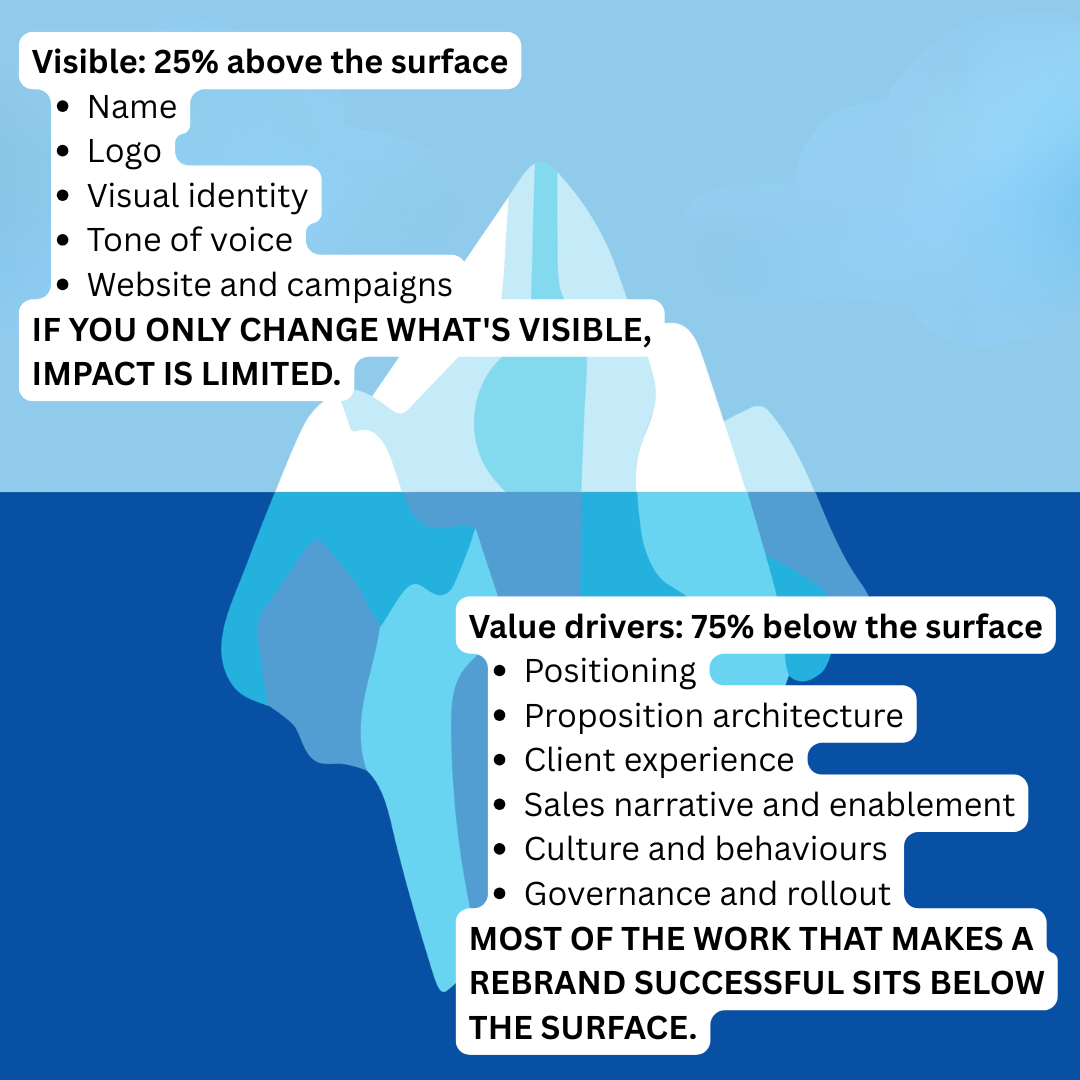
That’s the upstream problem we solve at Find Your Angle. Our Un4gettable Framework pinpoints where your brand is blending in, and our 90-Day FIND Plan builds the positioning and brief that give every stakeholder, from partners to compliance, the same fixed point to judge the work against. We work alongside your internal team and existing agency, so the next creative review is about the idea, not the brand. And if the debate runs deeper than one campaign, it may be a sign that a rebrand is worth considering.
If that sounds familiar, we’d love to chat – book a free 30-minute strategy call and we’ll help you work out where the disagreement is really coming from.
Download the Creative Review Checklist
Want to keep this guide to hand? Download our free Creative Review Checklist and share it with your team.

Frequently Asked Questions
Most projects work well with two or three rounds, but the right number depends on the scope and the budget. What matters more is agreeing it upfront, so everyone knows when the last opportunity for changes is. Clear, consolidated feedback in each round is the best way to avoid needing more.
Involve compliance early, ideally at the brief stage, so the agency knows the boundaries before it starts. Then separate compliance requirements from creative preferences in your feedback, so the agency knows which changes are non-negotiable and which are open to discussion. Regulation defines what you can and can’t say, but it shouldn’t be a reason for work to look and sound like everyone else’s.
Keep the core review group small – the people accountable for the brief, plus anyone with final sign-off. Wider stakeholders, such as partners, fund managers or advisers, add valuable client insight, but their views are best gathered with specific questions and consolidated by the marketing lead into a single, prioritised response.