Wealth Management Brand Positioning and the Sea of Sameness
Wealth management brand positioning is the difference between winning attention and disappearing into a crowded market. At Find Your Angle, we help financial services brands break free from the sea of sameness by developing a distinctive, memorable positioning that drives attention and conversions.
After analysing over 250 wealth management and asset management brands, we know that clear, compelling messaging wins – while generic messaging underperforms. Discover your angle and make your brand the one clients remember first.
Shared visual themes are common in commoditised industries, but with clear positioning your brand remains differentiated and easy to recall. This is especially important under the 95:5 rule, where only a small fraction of your audience is actively in market.
Ready to sharpen your 2026 brand positioning?
Our full analysis for 2025 is now available here, where we’ve explored areas of overlap, identified opportunities, and observed how AI and innovation themes are emerging in competitor positioning and comms.
Sharpen Your Wealth Management Brand Positioning for 2026
To find out how you compare to your competitors and how you can win in 2026, please get in touch.
Source: How B2B Brands Grow The Ehrenberg-Bass Institute for Marketing Science
For workshops, ice breakers, problem solving or team engagement
Brain teasers for strategic thinking include fast exercises to switch a room on. In fast-moving workshops, that first spark of focus is what unlocks sharper thinking for everything that follows.
’25 Brain Teasers to Unlock Strategic & Creative Thinking’ shows how simple mental challenges can ignite focus, boost collaboration and energise any group – whether you’re running in-person or hybrid sessions.
Download now to spark engagement from the first minute and transform business-as-usual meetings into lively, creative problem-solving.
As teams move into 2027 planning, these 25 brain teasers offer a quick way to shift mindsets and spark the kind of open, strategic thinking needed for bigger, longer-term decisions – that’s not to mention the health benefits! They help people step out of day-to-day execution mode and into a more curious, exploratory frame that’s essential for shaping future-focused plans.
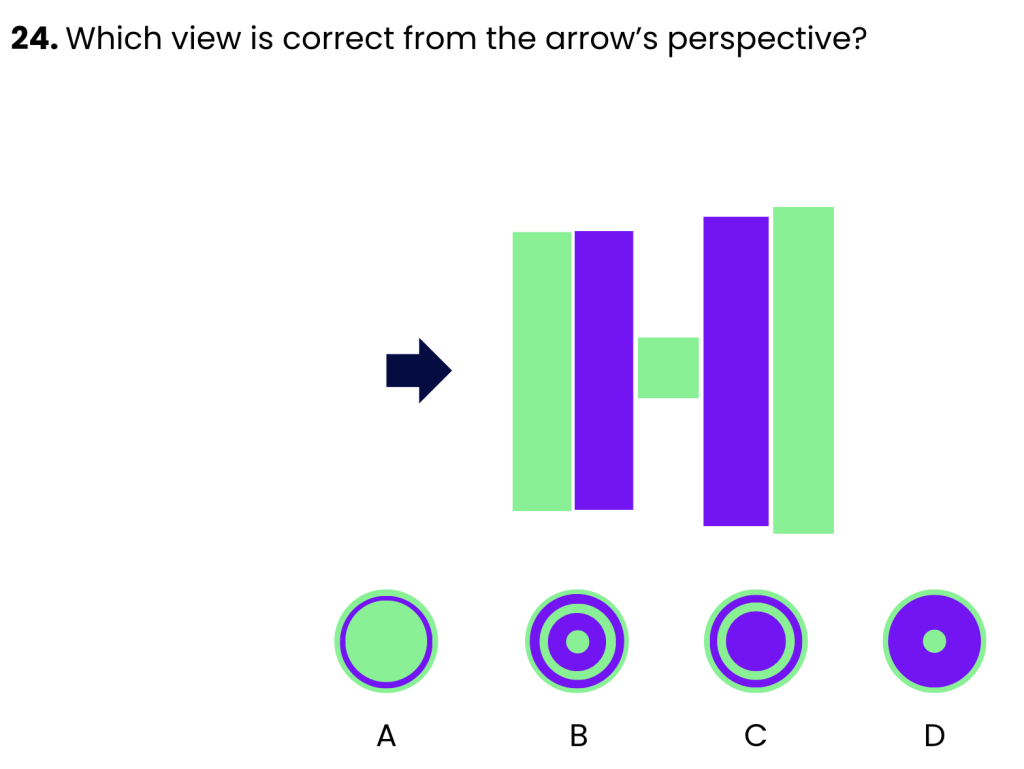
Brain teaser example:
Using these 25 brain teasers across your planning sessions can break up heavy strategic work and keep the group energised. They create small moments of challenge and surprise that stimulate fresh thinking, making it easier for teams to generate sharper insights and align around a stronger strategic direction.
Want to make your 2027 planning sessions sharper?
Want brain teasers for strategic thinking to sharpen your next planning session?
Download all 25 brain teasers and bring them into your next workshop, or get in touch to talk through how we help teams turn strategic thinking into a clearer, more distinctive 2027 plan.
Your people and agency aren’t the problem, but your marketing strategy might be.
Plug-in marketing strategy teams are quietly changing how CMOs get unstuck without disrupting what’s already working. Here’s what that sounds like in practice:
“We’ve worked hard to build trust with our agency and in-house team. I just didn’t want to bring in someone who’d throw our marketing strategy off or start telling everyone what to do.”
It’s something we hear often and it makes sense.
When things are working (or mostly working), the last thing you want is someone coming in and causing disruption – not to mention the time and cost that come with it.
But what if you could bring in a new layer of thinking which you feel your business needs, without breaking what’s already there?
Your people and agency aren’t the problem, but your strategy might be.
Here’s what could help.
There’s a growing wave of ex-agency strategists who plug into your existing setup – not to replace it, but to unlock more from it.
They work alongside your current agency or in-house team, bringing sharper thinking and fresh perspectives to your marketing strategy, to deliver the results you know your business needs.
The whisper network
This new way of working, a quiet but powerful shift in the marketing industry, is being referred to as the whisper network.
This kind of external support is available to improve what you’re already doing. Not replace it. Across the industry, clients who are reliant on long standing partners are saying “I wasn’t sure an outside team could plug into what we were already doing.” It’s a common concern, but the truth is – the right team can.
It’s a win-win set-up.
This hybrid model, highlighted by the IPA in their report The Future of Brands and Their Relationships is becoming a reality, perhaps sooner than the industry bodies expected.
This approach allows brands to engage agencies on a project-by-project basis, perfectly aligning with the growing demand for short-term, results-driven collaborations.
It appeals to business owners and senior marketing leaders because it’s discreet, experienced and able to make your marketing strategy work harder without disrupting what’s already working or unsettling your existing team.
Flexible, senior ex-agency minds who can help action change quickly.
Small, focused teams of talented people with powerful tools and frameworks behind them. Systems they know work because they have tried and tested them with many clients over many years.
Problem solvers who slot in seamlessly, support the change and step away when the job is done.
No disruption, no desire to run the show – just the right thinking, the right marketing strategy, at the right time.
This has never been more needed.
Why are more CMOs turning to plug-in marketing strategy teams?
According to the IPA Bellwether Report Q1 2025, 24.2% of UK companies reduced their marketing budgets – the first decline in four years – which the industry has taken to signal a move towards tactical, short-term marketing efforts that deliver immediate and measurable results.
Plus, as we know and as mentioned by Mintel here ‘With data-driven insights and AI tools, brands can now cater to specific consumer mindsets in order to create experiences that resonate on a personal level’.
Doing things the way you always have just doesn’t cut it anymore. In a world where we crave emotional connection – with each other and with the brands we choose- it’s time to shift from routine to resonance.
The agency world can see that brands are increasingly seeking partners who can plug in seamlessly, offer fresh strategic thinking and drive measurable outcomes within shorter time frames.
Find Your Angle
And that’s exactly where Find Your Angle comes in, a plug-in marketing strategy team built to move the dial fast, without disrupting what’s already working.
An experienced team – motivated to see your marketing ambitions come to life in reality – not just filed away under ‘strategy’.
Within 90 days we are committed to moving the dial for your business – and it starts with your marketing strategy.
And because we love a metaphor to tell a story. Think of us like a nourishing treatment in a shampoo ad.
The ones where you see the product strengthening what’s already there. No disruption, no heavy layering.
Just targeted support that leaves everything working better, shinier, smoother.
Find Your Angle helps you unlock better marketing results through precise, practical shifts to your marketing strategy. Our experienced team works seamlessly alongside yours to sharpen strategy and boost ROI – quickly and without disruption.
We can help bring together the right skills and talent you may need to strengthen your marketing efforts. With relationships built over many years, we can recommend the perfect mix of collaborative experts to help your brand succeed.
Looking ahead to 2027?
Our Plan 27 Workshop, built around the proven 3Cs Framework, shows you how to evolve your 2027 marketing narrative to stand out from competitors, resonate more with your consumers, and improve ROI within 90 days. Reach out to find out more.
The 3Ps and 3Cs framework for marketing ROI in asset management and professional services
A 1-point gain in brand metrics such as awareness and consideration drives a 1% increase in sales (Nielsen’s experience base). In financial services and B2B professional services, building that kind of brand salience is harder than in most sectors.
Compliance constraints narrow what you can say. Risk aversion shapes how boldly you say it. And years of watching competitors’ messaging has produced a market where asset managers, wealth managers and professional services firms tend to use the same language, the same claims and the same tone.
The answer isn’t flashier campaigns or more spend. It’s building a brand that’s hard to ignore. A practical way to do this is by aligning three brand-building pillars: promise, personality and proof, with the strategic realities of your customers, your company and your competitors.
In crowded B2B markets, true brand distinctiveness comes from coherence across promise, personality and proof. Here’s how to apply that in practice.
Increasing brand distinctiveness through the lens of the 3Cs
1. Promise (customer fit)
Your brand promise should reflect a deep understanding of what clients in your sector actually value, not just what firms have traditionally claimed they value. In financial services, that gap is often significant.
Most wealth managers and asset managers use the same promises: ‘long-term thinking’, ‘client-focused’, ‘robust investment process’. These are the entry ticket to the conversation, not a reason to be chosen. A distinctive promise addresses a specific, felt client need.
Vanguard built its entire brand on a promise that was distinctive not because it was more sophisticated, but because it was more honest: low-cost, long-term investing designed to give ordinary investors a fair outcome. In a market full of complexity and fees, simplicity and transparency were the differentiator.
For B2B professional services firms, the same logic applies. ‘Specialist expertise’ and ‘results-focused delivery’ are expected. A promise that speaks to the specific anxiety of a buying decision is far more ownable. ‘Measurable progress within 90 days, or we tell you why’ is a promise. ‘Committed to client outcomes’ is not.
2. Personality (company truth)
Brand personality in financial services defaults, almost universally, to ‘professional, trusted and experienced’. These are not wrong. But they describe every serious firm in the sector, which makes them useless as differentiators.
Your personality becomes distinctive when it reflects something actually true about how your firm thinks and operates. A firm that challenges clients’ assumptions rather than confirming them has a personality. A firm that speaks plainly about risk, fees and trade-offs in a sector that often obscures them has a personality. A firm that publishes its methodology and invites scrutiny has a personality.
Brewin Dolphin and Rathbones both operated in the same UK wealth management market. Their personalities were distinct: one positioned around deep personal relationships and regional roots; the other around disciplined investment governance and institutional rigour. Neither was more correct. Both were defensible because they reflected real differences in how each firm worked.
Personality isn’t tone of voice guidelines. It’s the answer to the question: if your brand walked into a room, how would it introduce itself, and what would it never say?
3. Proof (competitive advantage)
In regulated sectors, proof matters more than anywhere else. Clients are cautious. Advisers have compliance obligations. Buyers of professional services have been disappointed before. Trust is earned slowly and lost fast.
But proof in financial services is often used defensively: to satisfy regulatory requirements or answer objections, rather than strategically, to differentiate. The firms that use proof well do so offensively: specific performance data, named client outcomes, independently verified track records, transparent fee comparisons.
A boutique UK asset manager with a 12-year track record in infrastructure debt has proof that a generalist multi-asset manager simply cannot replicate. That specificity is a competitive advantage, but only if they’re willing to claim it clearly and build their brand around it rather than burying it on page 14 of the factsheet.
Brand distinctiveness – aligning the 3Ps + 3Cs to build a strategically distinctive brand
The question for any financial services or professional services firm isn’t just ‘what can we prove?’ It’s ‘what can we prove that our competitors can’t easily match?’
To build brand distinctiveness, you need to map your promise to a compelling client need, root your personality in authentic company culture, and deliver proof that differentiates from competitors. When these six dimensions align, you don’t just stand out in the market. You stand for something specific and hard to replicate.
Finding your 3Ps through the lens of your customer, company and competitors
Step 1: Map the promise
Customer lens What specific concern or aspiration does your brand address? What keeps your clients up at night, and what outcome do they actually want?
Company lens What do you deliver better or differently to other firms? What’s the promise you can make and actually keep, based on how you work?
Competitor lens What are your competitors all saying? Where is the gap, the position no one is credibly claiming, that you could occupy?
Step 2: Define the personality
Customer lens What tone fits your clients’ world? Are they analytical and data-driven, or relationship-led and values-oriented? What communication style do they respond to?
Company lens What values and traits are actually true of your firm? What behaviours would your best clients already recognise? What would your team say your culture actually is?
Competitor lens What language and visual conventions dominate your sector? What tone would feel different without feeling wrong? Where is the space to be more direct, more human, or more specific?
Step 3: Identify the proof
Customer lens What evidence convinces your clients to choose you or recommend you? What do they cite in referral conversations? What would they miss if you disappeared?
Company lens What are your strongest, most defensible proof points? Track record, methodology, client retention, team credentials, named case studies?
Competitor lens What proof points are hard for competitors to replicate? What do you have that a generalist, a larger firm, or a newer entrant simply cannot claim?
The 3Ps and 3Cs matrix for financial services and B2B professional services
Customer
Company
Competitor
Promise
What specific client concern or aspiration does our promise address? Is it felt and specific, or generic and expected?
What can we credibly commit to, based on how we actually work and what we actually deliver?
How is this promise different from what every other firm in our sector is already saying?
Personality
What tone and communication style fits our clients’ professional world? What would they find refreshing rather than just familiar?
What values and traits are authentically true of our firm, not aspirational, but already observable in how we work?
How do we show up in a way that competitors can’t or won’t? What personality space is unclaimed in our market?
Proof
What evidence do our clients find most convincing? What do they reference when they refer us to a peer?
What are our strongest, most defensible proof points: track record, methodology, client retention, named outcomes?
What proof can we demonstrate that competitors cannot easily replicate, even if they wanted to?
Brand distinctiveness in action: a UK wealth manager focused on business owners
This framework works across different client segments and firm types. The example below shows how a UK wealth management firm serving business owners approaching a liquidity event might apply the 3Ps and 3Cs to build a clearly distinctive position. This is the 3Ps and 3Cs framework financial services firms can actually use, not a theoretical model, but a practical way to test whether your positioning is genuinely ownable.
This framework works across different client segments and firm types. The example below is hypothetical, but shows how a UK wealth management firm serving business owners approaching a liquidity event might apply the 3Ps and 3Cs to build a clearly distinctive position.
Illustrative example: A specialist wealth manager for business owners
Promise
To give business owners financial clarity before, during and after a business sale, so they step into the next chapter with a plan, not just a sum of money.
Personality
Direct, practical and plain-speaking. Comfortable with the complexity of business exits; impatient with the vagueness that often surrounds them. Treats clients as financially literate adults who can handle an honest conversation.
Proof
200+ business owner clients supported through liquidity events. Average client portfolio retained post-exit: 94%. Specialist team with backgrounds in corporate finance as well as personal wealth planning.
Customer
Business owners aged 45-62, approaching an exit event. Anxious about what financial life looks like post-sale. Highly capable financially within their business; less confident about personal wealth decisions. Want a firm that understands the specific complexity of a business sale, not one that will simply receive the proceeds.
Company
A boutique firm with deep expertise in business exit planning. Corporate finance background in the founding team. Small enough to give senior attention to every client; experienced enough to handle the complexity of multi-million-pound liquidity events.
Competitors
Private banks (too impersonal, not specialist enough in exit events). Accountancy-led wealth services (strong on tax; weaker on whole-life financial planning post-exit). Large IFA networks (broad service, not specialist enough to earn the trust of a business owner at this critical moment).
Brand distinctiveness outcome “The wealth manager for business owners who want financial clarity before they sign.” This position is ownable because it’s specific. No generalist private bank can credibly use it. No large IFA network can match the specialist proof points behind it. And it speaks directly to the anxiety that defines the buying moment for this client.
Getting financial services and B2B brands to stand out and deliver greater returns
The 3Ps and 3Cs framework helps financial services firms move past generic positioning and build something genuinely their own. At Find Your Angle, we help marketing teams in financial services and B2B professional services build that kind of brand clarity, using this exact structured approach: a way to identify a position that’s specific to your firm, your clients and your competitive context.
The firms that get this right don’t just win more business. They win better business, with clients who chose them for the right reasons and who are harder for competitors to poach. Brand distinctiveness isn’t a communications exercise. It’s a business strategy.
Find out how the 3Ps and 3Cs framework can help make your brand more powerful and your marketing more effective. Schedule a strategy call here
Manage your privacy
We use technologies like cookies to store and/or access device information. We do this to improve browsing experience and to show (non-) personalized ads. Consenting to these technologies will allow us to process data such as browsing behavior or unique IDs on this site. Not consenting or withdrawing consent, may adversely affect certain features and functions.
Functional
Always active
The technical storage or access is strictly necessary for the legitimate purpose of enabling the use of a specific service explicitly requested by the subscriber or user, or for the sole purpose of carrying out the transmission of a communication over an electronic communications network.
Preferences
The technical storage or access is necessary for the legitimate purpose of storing preferences that are not requested by the subscriber or user.
Statistics
The technical storage or access that is used exclusively for statistical purposes.The technical storage or access that is used exclusively for anonymous statistical purposes. Without a subpoena, voluntary compliance on the part of your Internet Service Provider, or additional records from a third party, information stored or retrieved for this purpose alone cannot usually be used to identify you.
Marketing
The technical storage or access is required to create user profiles to send advertising, or to track the user on a website or across several websites for similar marketing purposes.