Table of Contents

THE MOST EXPENSIVE PROBLEM IN B2B MARKETING? BEING FORGETTABLE
Memorable brands ROI starts with a simple truth: in B2B marketing, forgettable brands pay a tax. Unforgettable brands stand out, while others converge on the same colour palettes, value propositions, tone of voice, and promises: ‘partnership’, ‘innovation’, ‘customer centricity’, ‘solutions’.
This results in a sea of competent, credible and completely indistinguishable brands and marketing comms. The problem is that indistinguishable brands don’t convert efficiently.

THE 95:5 RULE
When a brand looks and sounds like everyone else, performance suffers in predictable ways:
- Cost per lead creeps up
- Conversion rates stagnate
- Sales cycles lengthen
- Marketing becomes increasingly reliant on short-term activation rather than long-term demand
The issue isn’t media efficiency or funnel design. It’s memory. Most of your audience isn’t buying yet. Around 95% of B2B buyers are not in-market at any given moment. They see your advertising, content, or campaigns long before they are ready to purchase.

When they are looking to buy, they don’t conduct a blank-sheet review of every possible supplier. They default to what they remember. Not what they liked. Not what had the best targeting. What they remembered. Being top of mind isn’t a vanity metric, it’s a commercial one.
PERFORMANCE MARKETING CAN’T FIX ANONYMITY

Many B2B organisations attempt to compensate for weak brand memory by doubling down on performance tactics:
More gated content
More retargeting
More urgency messaging
More sales enablement
But activation works best when it’s activating something that already exists in the buyer’s mind. If there’s no distinctive memory structure to draw on, performance marketing becomes increasingly expensive and increasingly fragile.
WHY SAMENESS KILLS MEMORABILITY
Brands become forgettable because they optimise for:
Category norms rather than differentiation
Consensus language rather than conviction
Polished messaging rather than perspective
Ironically, many B2B brands are afraid to stand out precisely because the stakes feel high. The result is a kind of institutional beige: inoffensive, professional and invisible.

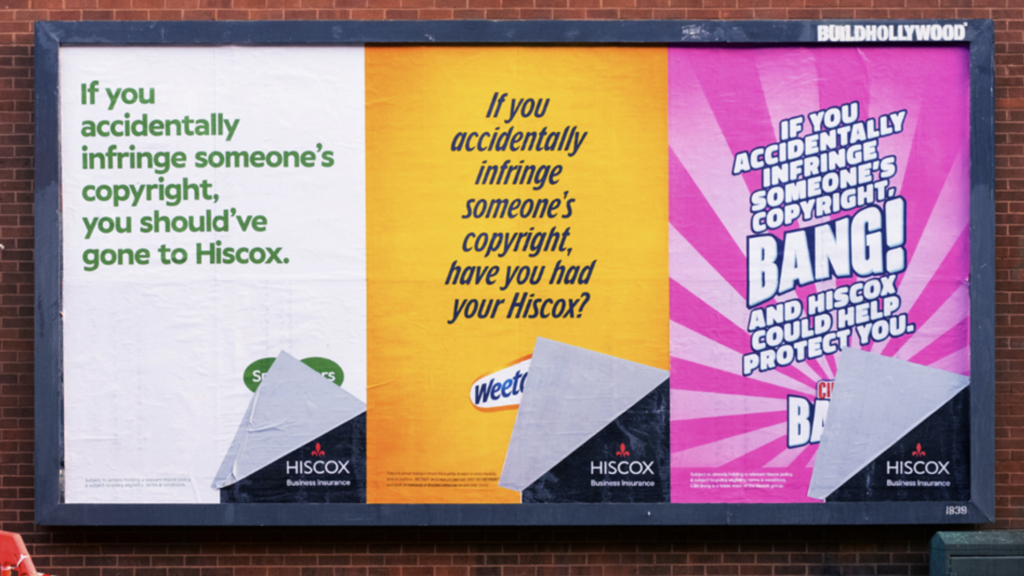
POINT OF VIEW
Unforgettable brands are more valuable, not louder.

The brands that stick don’t do it by shouting more. They do it by being more valuable to their audience before a buying decision exists.
They:
Share knowledge buyers genuinely care about
Teach, reframe or challenge assumptions
Invest in content that helps people think better at work
Show they understand the world their customers operate in
Crucially, they don’t just inform, they take a point of view.
PERSPECTIVE
Distinctiveness comes from perspective, not positioning statements. Being unforgettable isn’t about a clever tagline or a beautifully written brand manifesto. It’s about consistently showing up with a recognisable point of view:
A clear stance on what matters and what doesn’t
Interprets industry trends in its own way
Has opinions, not just observations
Is willing to sound different, even if that means being disagreed with
This is where thought leadership stops being a content tactic and becomes a memory-building system. Thought leadership isn’t selling, and that’s the point. The fastest way to make content forgettable is to make it transactional.

MEMORABLE BRANDS
Buyers don’t remember brands that are constantly selling. They remember brands that helped them see something differently. When you share insight without an immediate ask, you earn:
Attention before intent
Trust before contact
Preference before procurement
By the time the buyer is ready, the decision often feels pre-made.
The real competitive advantage: mental availability
In crowded B2B markets, competitive advantage doesn’t come from having a slightly better offer. It comes from being the brand that is easiest to recall when the problem arises.
Memorable brands:
Reduce cost per lead because demand comes to them
Convert more efficiently because familiarity lowers risk
Command higher value because they feel established and trusted
Forgettable brands are forced to compete on price, pressure and persistence.
This is memorable brands ROI in practice: lower acquisition costs, higher conversion, and pricing power that comes from being remembered rather than rediscovered every time.

THE UNCOMFORTABLE TRUTH

If your brand disappeared tomorrow and your audience barely noticed, that’s not a media problem. It’s a memory problem.
And memory is built through:
- Distinctiveness over conformity
- Value over volume
- Perspective over promotion
Memorable brands ROI comes down to this: in a market where everyone is saying something, the brands that win are the ones people remember without being reminded.
Want the full breakdown? Download the Unforgettable guide.
Wondering whether your brand is memorable or just familiar?
Let us know your organisation’s name and the sector you operate in, and we’d be happy to share a few practical ideas and quick wins to help make your brand unforgettable in 2026.
No obligation, just a clear strategic perspective.
Please contact us here